
When I was seven, there was nothing more important to me than the following:
- Fashion Plates
- Drawing
- Tornadoes
- Barbie
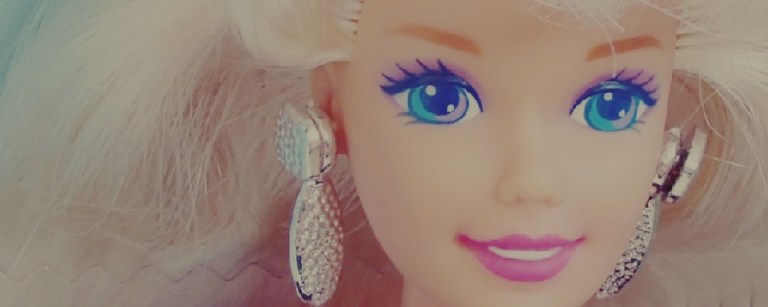
Like millions of other little girls drawn in by glittery pink boxes and impossible perms, I was a slave to Barbie. I wanted everything. I had the Atlanta 1996 Gymnast Barbie, I had her white Ferrari – hell, I even had a Barbie branded playhouse that I got for my fifth birthday, where I had a Barbie themed birthday cake. One Halloween, I even went as a Barbie bride. It’s actually kind of creepy in retrospect. So when Christmas was rolling around in 1996, there was nothing I wanted more than Barbie Fashion Designer. This thing was flying off the shelves, though most PC sales charts published now seem to omit it from rankings. In its first three months alone, it sold 500 000 copies. This was in a market dominated by the rise of shooters such as Duke Nukem 3D and the newly released Diablo. It seems that people will scoff at this in hindsight, placing it somewhere among Imagine Babies in the pantheon of ‘lame games for girls’. There are very few girl targeted games that could still maintain anywhere near that now.
Coming closer to the holidays, I remember it had been sold out in most retailers in our area. Yet there it was under the tree on Christmas morning and I went nuts. This certainly wasn’t my first experience with computers, the first game I remember playing was the Living Books version of Just Grandma and Me, an interactive storybook that could be narrated in several languages. But this was a game for me, it spoke to all my desires (except for my unwavering dedication to tornadoes after seeing Twister earlier that year, where’s my Storm Chaser Barbie anyway?).
But what was the big deal about such an obvious franchise cash grab? While yes, it was about superficial fashion and stereotypes, it was actually quite creative. It took the concept of Fashion Plates, a toy in which you assembled an outfit from a selection of plastic plates and traced the back with a crayon to create an outline of your design, and then applied it to a digital setting that was non-threatening enough to even the girliest of girls. The outfits that you designed could be printed out on fabric, and assembled with special hook and loop tape. If you ran out of fabric, you could buy refill packs for about the price of a pack of photo paper. Personally, I never got the hang of actually making the clothes. I might’ve been a little old for the target demographic at the time, but some of those instructions about making darts in a bodice would surely have gone over the head of most girls under 10. So instead of focusing on making the outfits in real life, I was more fascinated with just designing different looks for my digital paper doll.
You began by choosing a theme such as Party Surprise, Cool Careers or Dream Date and then you’re given the freedom to piece an appropriate outfit from head to toe. You could choose the patterns and colours, and even add gigantic roses or ribbons as accessories. These were pretty hideous in hindsight, and a lot of the clothes are reminiscent of your mom’s Simplicity Pattern book from 1993. Somehow the styles in this game were dated from the get-go, but to a young girl in the mid-90s, this was still the closest we’d get to Cher Horowitz’s virtual wardrobe. Naturally, most of the outfits you can create were pretty similar to Barbie outfits you could already purchase. But being able to change the pattern and colours gave young girls the freedom to dress Barbie solely in lime green if they detested pink. Or put tropical prints on every single piece of an outfit. I believe I’m guilty of both.
But the best thing about this game is the fashion show. When you finished placing the last possible scrap of floral print on your dress, you could send Barbie down a virtual runway after a 5-10 minute wait while the game rendered your creation in 3D. It was incredible for the time, to be able not to only render Barbie realistically strutting in a sea of (almost) realistically flowing tulle, but to also render whatever design you came up with? The render time bored me senseless as a kid, but it was always worth it. Let’s see Duke Nukem 3D do that. You know, without crashing the level editor.
This was my gateway game. While the Living Books series taught me how to use a computer, this was the game that kept me at the computer and wanting to learn more. It was thanks to this unlikely girly game that I got into games in the first place. Though the follow up games from the developer would pale in comparison, Barbie Story Maker is also worth a mention for its movie-making suite that I’m sure led a few young girls on their way to becoming video editors down the track. I wish I could say that Barbie games are still up to the same quality today, but I feel they’ve been lumped with the wrong developers and typically feel like shovel ware.
So there you have it, the first in a series of influential games to my upbringing! As an added bonus, here’s the gloriously awful midi soundtrack to Barbie Fashion Designer. Hope you’re ready for cowbells and slap bass.
 Total Recollection